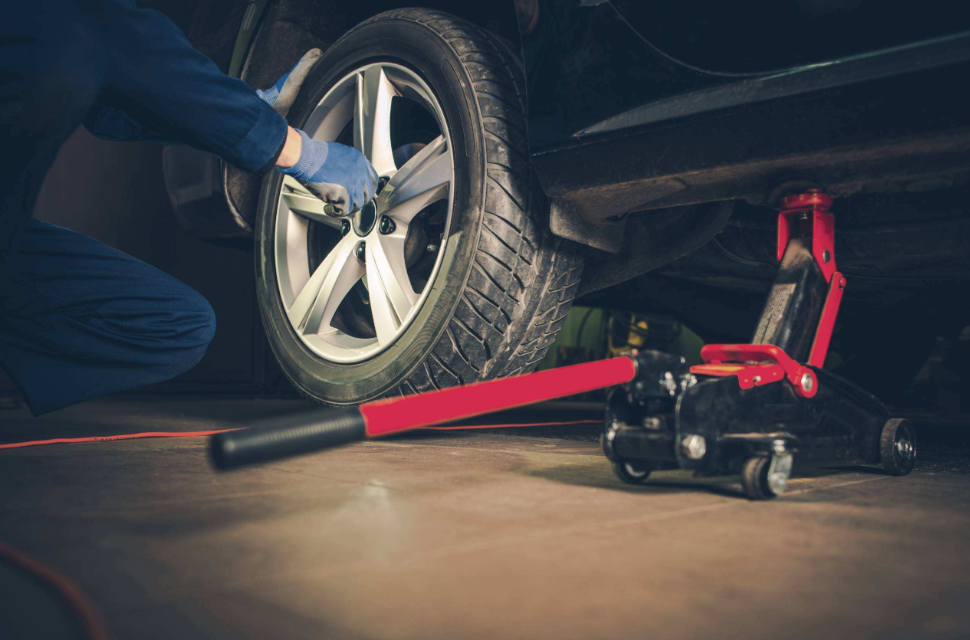
Look at the tires on a Ford F-150 ® or Super Duty ® and it's tempting to think they're all doing roughly the same job. They're round, they're touching the road, and there are 4 of them. Simple enough. Except they aren't doing the same job at all. The front tires steer and deal with substantial braking forces. The rear tires may carry significant loads and transmit power to the road. Add towing, unpaved surfaces, changing payloads, and different drivetrain configurations, and each tire can experience its own pattern of wear. Rotation gives those tires a chance to share the workload. For Ford truck owners around Pilot Point, that's a simple piece of maintenance with some very practical benefits. Your Tires Don’t Have Equal Jobs Modern Ford trucks can be configured for everything from commuting and jobsite duty to substantial towing and off-road travel. Those different jobs change the forces passing through the tires. Front tires have steering responsibilities that the rear pair don't. Braking transfers weight forward, increasing the load carried by the front axle during deceleration. Rear tires, meanwhile, can experience different stresses as payload and power delivery change. Drivetrain configuration, tire type, alignment, inflation pressure, road surface, and driving style all influence how tread disappears. This is why leaving each tire in one position indefinitely isn't particularly helpful. Even Wear Is About More Than Saving Rubber Getting more useful life from a set of tires is a good reason to rotate them, but it isn't the only one. Tires are the truck's contact with the road. Their condition influences acceleration, braking, steering response, traction, and ride quality. When tread depths and wear patterns differ substantially across the vehicle, those differences can affect how consistently the truck responds. That becomes especially relevant when the truck is doing truck things. A loaded bed changes vehicle weight. A trailer introduces additional forces. Loose surfaces ask more from available traction. Rain adds another variable entirely. None of this means a tire rotation magically improves capability. It simply helps keep the tires wearing in a more consistent way, allowing the truck to make better use of the equipment already fitted to it. Your Tread Can Tell You Quite a Lot A rotation appointment is also a useful opportunity to look closely at the tires. Uneven wear isn't always caused simply by leaving a tire in one position for too long. Unusual tread patterns can point toward incorrect inflation, alignment concerns, suspension issues, or other conditions requiring attention. Rotating a damaged or improperly wearing tire doesn't solve the underlying problem. This is why tread inspection belongs alongside rotation. Check tread condition, look for visible damage, and maintain inflation according to Ford's recommendations for your specific truck and tire setup. If one tire looks dramatically different from the others, that's information worth investigating rather than something to hide by moving it to another corner. Let Ford Set the Schedule There are plenty of universal mileage rules floating around for tire rotations. Your Ford already has maintenance guidance written for the vehicle, so start there. Rotation requirements can depend on the model, drivetrain, tire configuration, and operating conditions. Follow the schedule and rotation pattern specified for your truck rather than assuming every F-150 ® and Super Duty® should receive identical treatment. Certain tire designs or configurations may also require different procedures. If your truck spends substantial time towing, hauling, driving on rough roads, or operating under other demanding conditions around North Texas, discuss that use with your service technician. Your maintenance needs should reflect what the truck does, not simply what the odometer says. Truck Tires Have Expensive Jobs A quality set of truck tires represents a significant ownership expense, particularly as tire size and capability increase. Promoting even tread wear can help you get better use from that investment before replacement becomes necessary. It can also make tire replacement planning easier because the set is being maintained consistently instead of allowing one or 2 positions to wear significantly ahead of the others. Keep records of rotations and other tire service as part of the truck's maintenance history, too. Good documentation makes it easier to understand what has been done and when the next service is due. Give All 4 Tires a Fair Share of the Work Ford truck owners around Pilot Point can use Platinum Ford North’s service department for tire rotations, inspections, and other scheduled maintenance. If your F-150® or Super Duty® is due for attention, arrange a service visit today and keep its maintenance history moving in the right direction.